Case study · Tamer Designs Ambrosia Foods & Schreiber Foods International

From a brochure site to a working catalogue.

Ambrosia's site was a brochure: logos, a carousel, and a product list pasted in as one long price sheet. We rebuilt it as a two-domain WordPress site for Ambrosia and its parent company, Schreiber Foods International. Distributors can now search every product, open its spec sheet, and find their sales manager on a map.
250+shelf-stable SKUs, each with its own page and spec sheet
10catalogue categories, each with its own photography
31sourcing countries drawn on a map generated from geographic data
2 → 1domains, one shared navigation across both
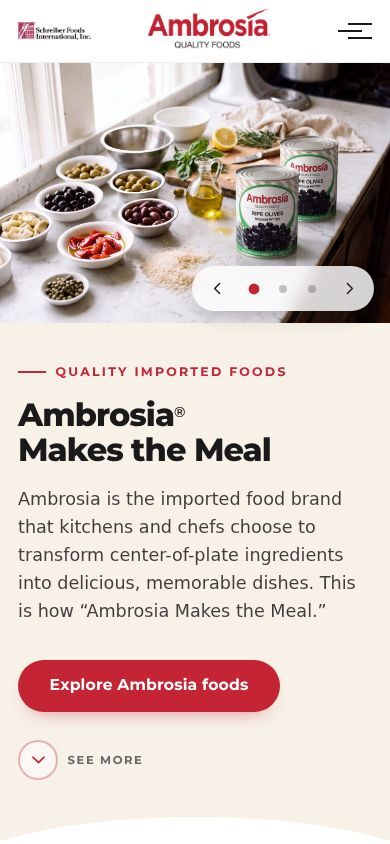
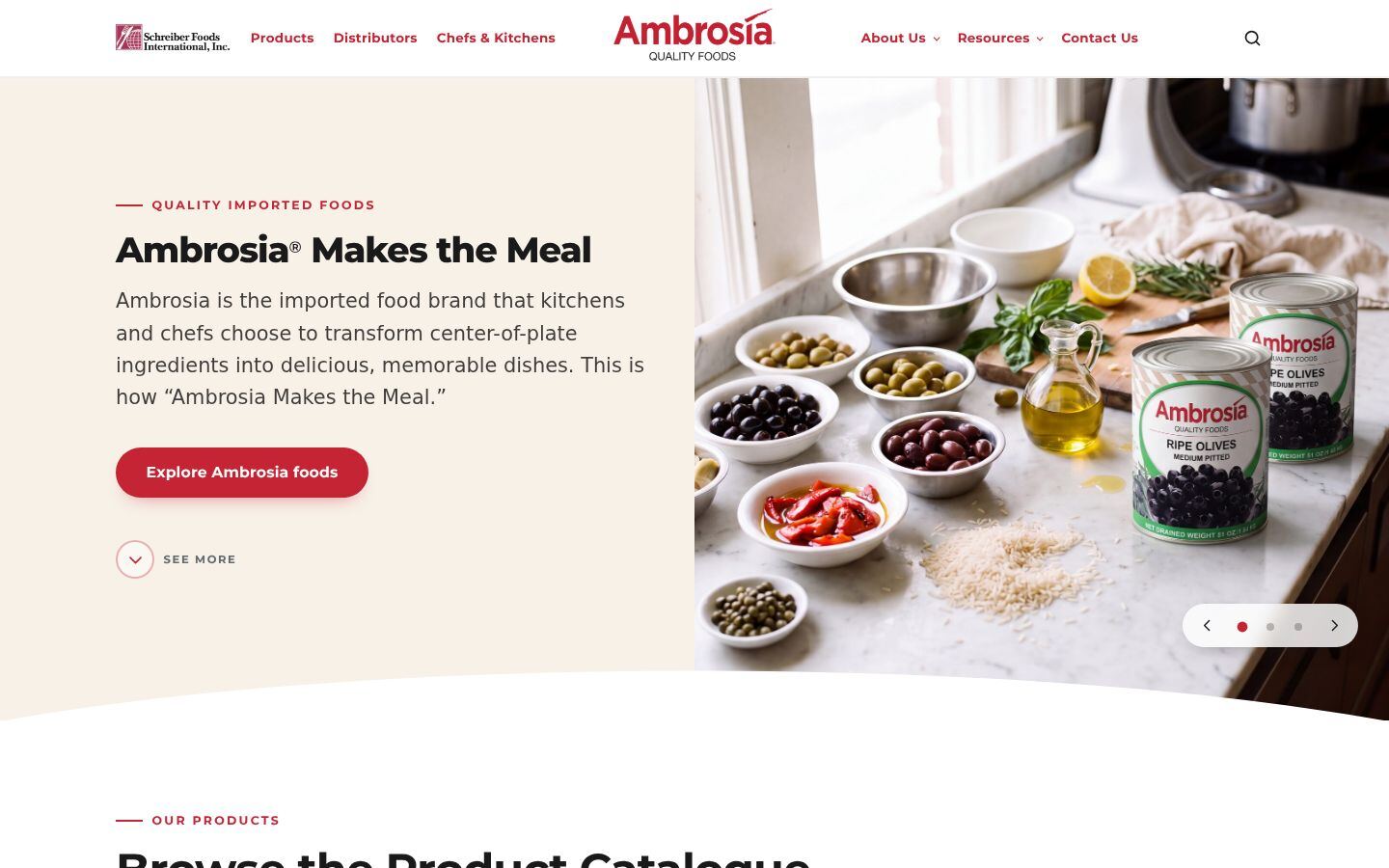
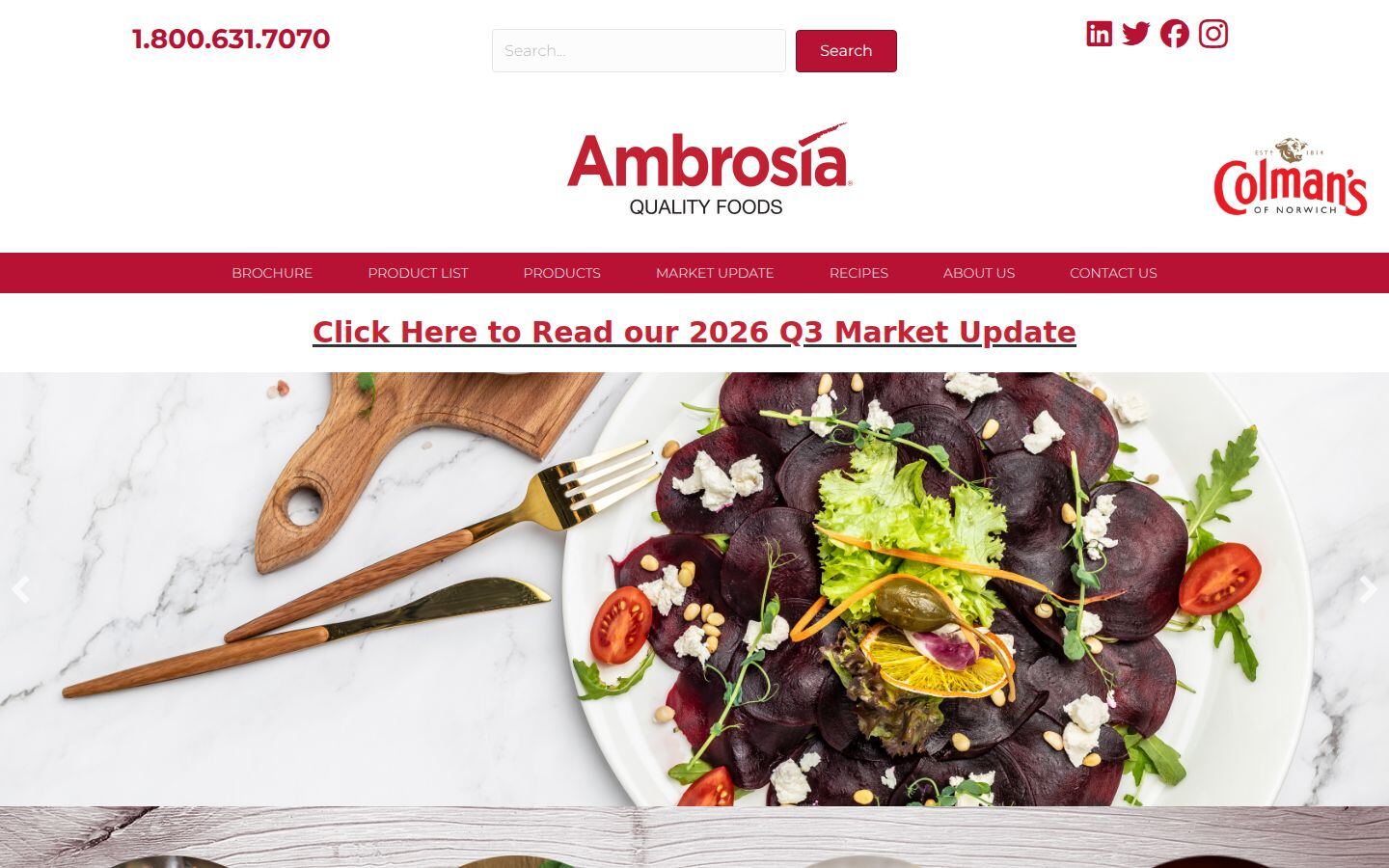
New Ambrosia homepage: split hero reading “Ambrosia Makes the Meal” beside a chef plating a dish Previous Ambrosia homepage: phone number and search bar, three logos, a red all-caps nav and a food carousel Before After
Drag the handle to compare the first screen at 1440 × 900.ambrosia-foods.com → new build
Homepage

Lead with the food and the offer

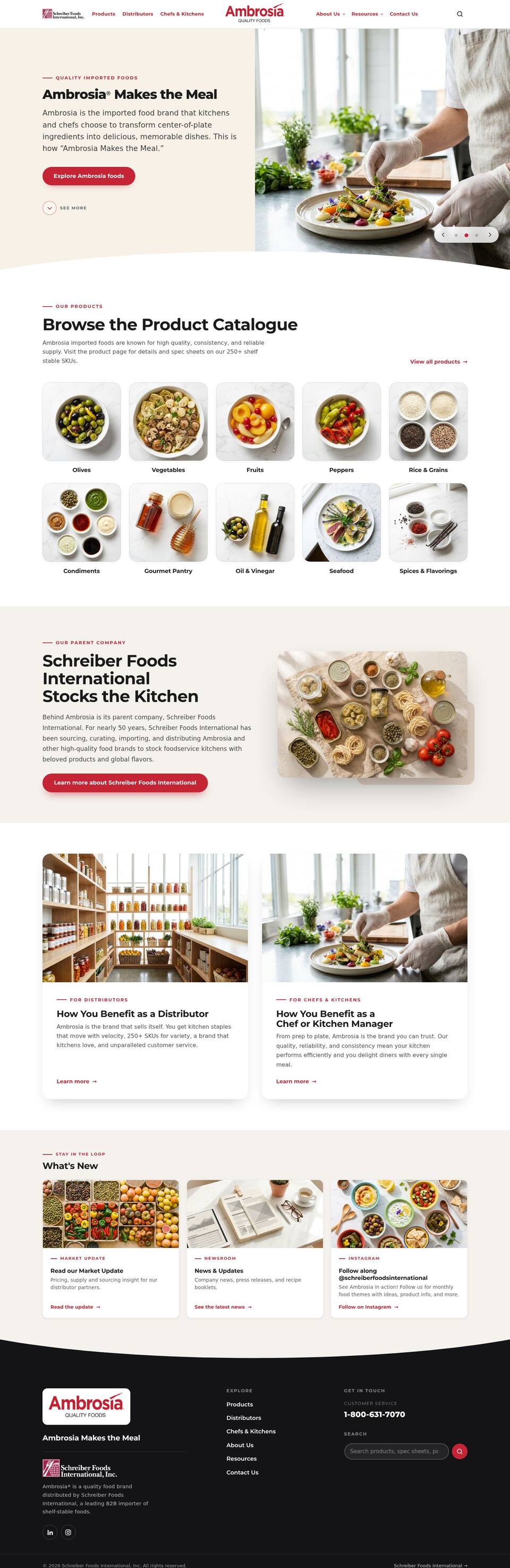
The old homepage opened with a phone number, a search box, three logos and a seven-item all-caps menu, with a carousel below. The new one says what Ambrosia is in one line, then gets to the catalogue, the parent company, and separate paths for distributors and chefs. Scroll inside each frame to see the full page.
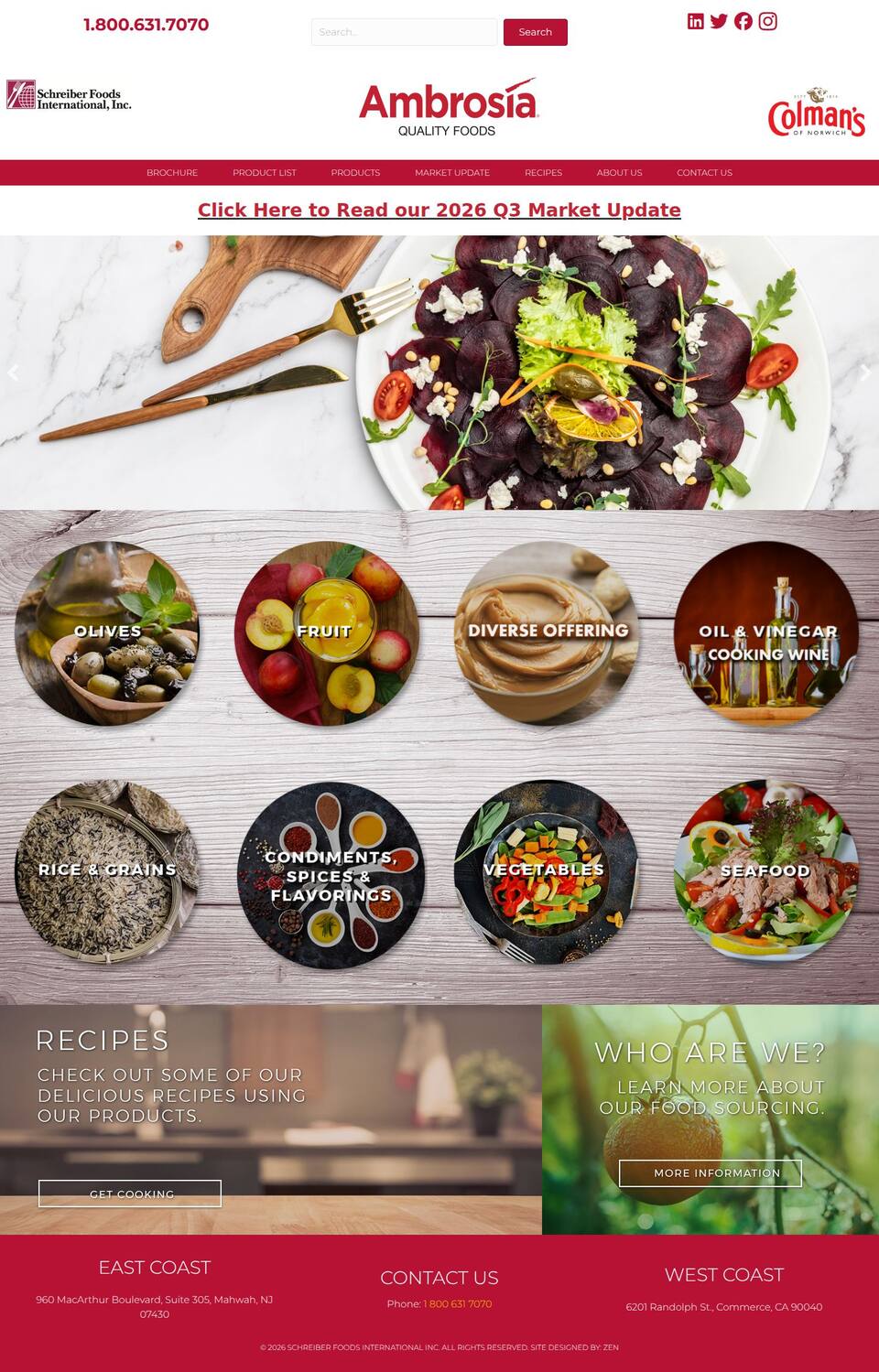
Beforeambrosia-foods.com/2,249 px
Full old homepage
After/ambrosia/4,425 px
Full new homepage: hero, product category grid, parent company band, distributor and chef cards, What's New
Before
Old homepage on an iPhone-sized screen
After
New homepage on an iPhone-sized screen

On a phone

Both captured at 390 × 844. On the old site, the first screen is the header. On the new one, it's the brand line and a button into the catalogue.

Catalogue

Categories that show what's inside

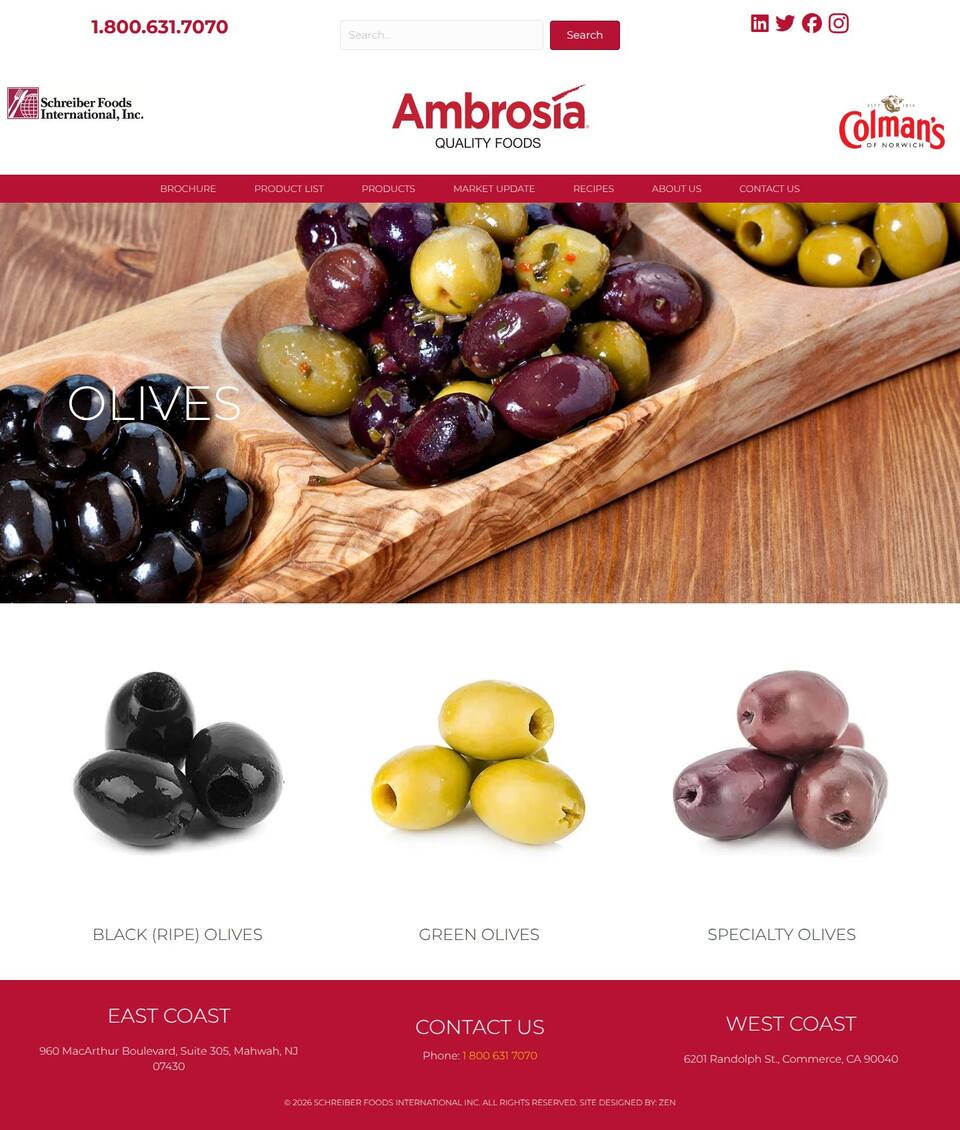
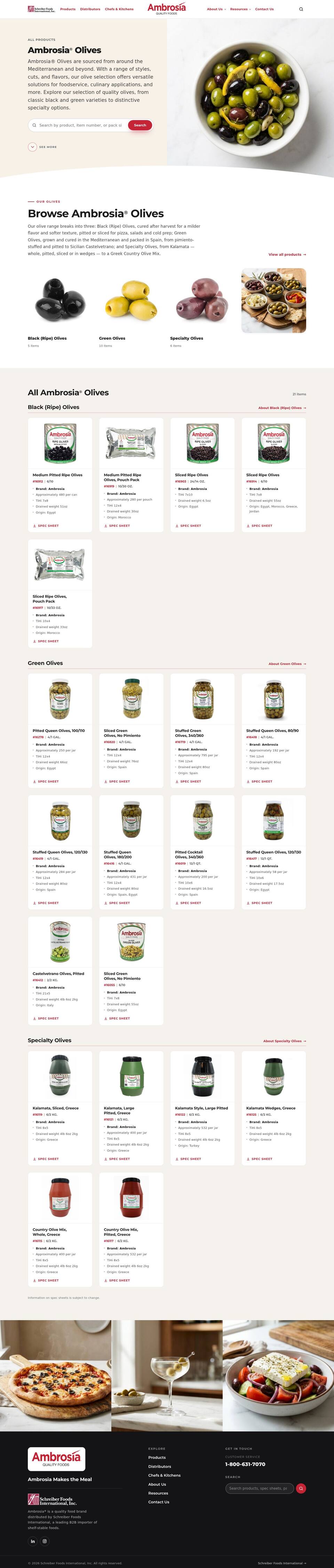
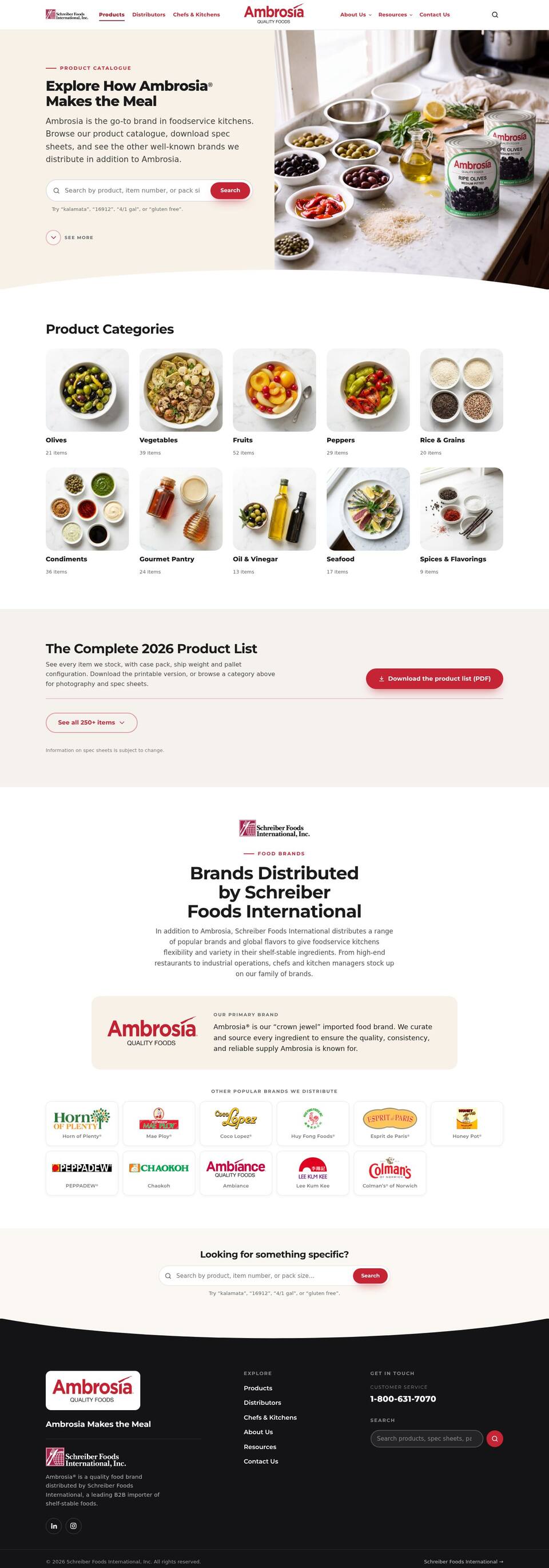
Before, the Olives category had one banner photo and three pictures of olives, with no products listed. Now each category page has search at the top, the full product range in groups, with item number, pack size, origin and a spec-sheet link, and serving photography for each category.
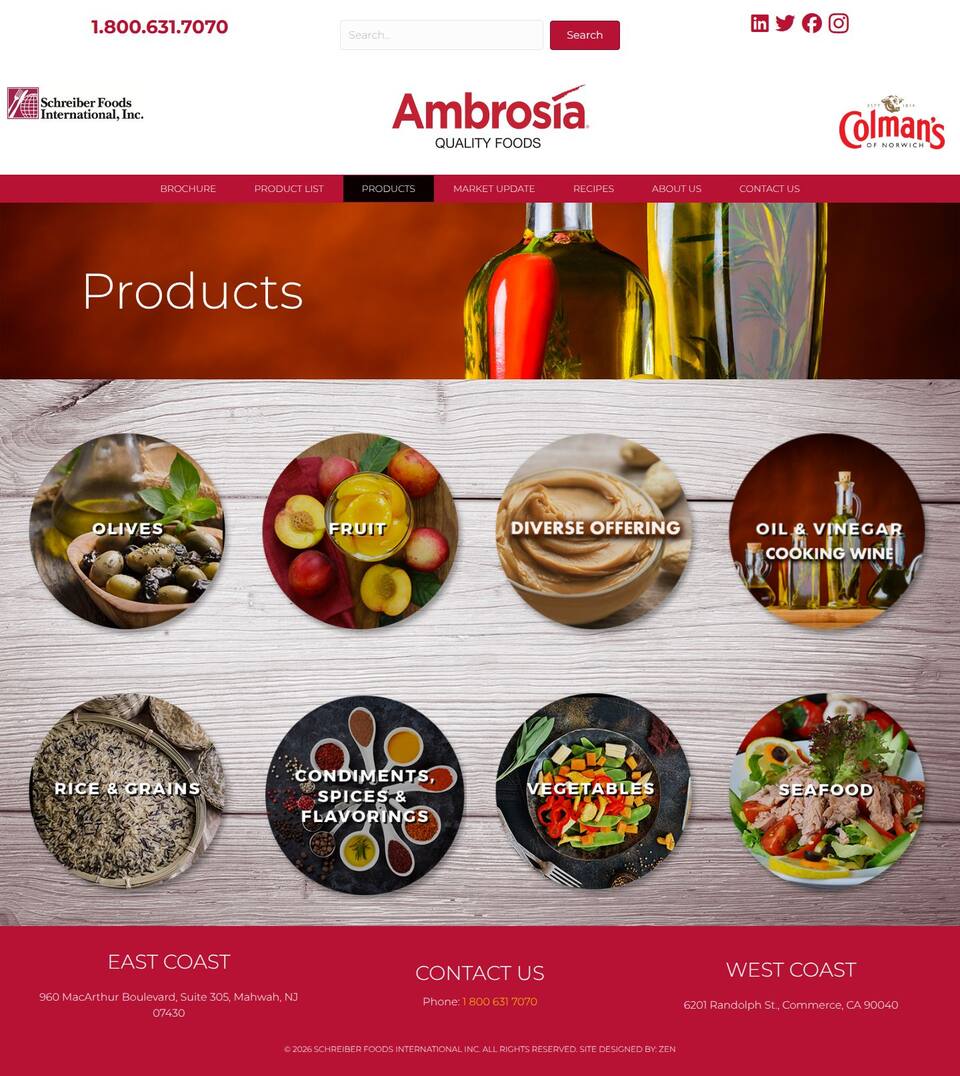
Beforeambrosia-foods.com/products/
Old products page: eight circular category photos on a wood-grain background
After/ambrosia/products/
New products page: search, ten photographed categories with item counts, the downloadable product list and other brands
Beforeambrosia-foods.com/products/olives/
Old olives page: banner and three olive photos
3 images, 0 products. To see what's in stock, you had to go to the product list.
After/ambrosia/catalogue/olives/
New olives page: every black, green and specialty olive with pack details and spec-sheet links
Every olive, grouped by type. Each card links to its product page and spec sheet.
Product pages

A page for every product

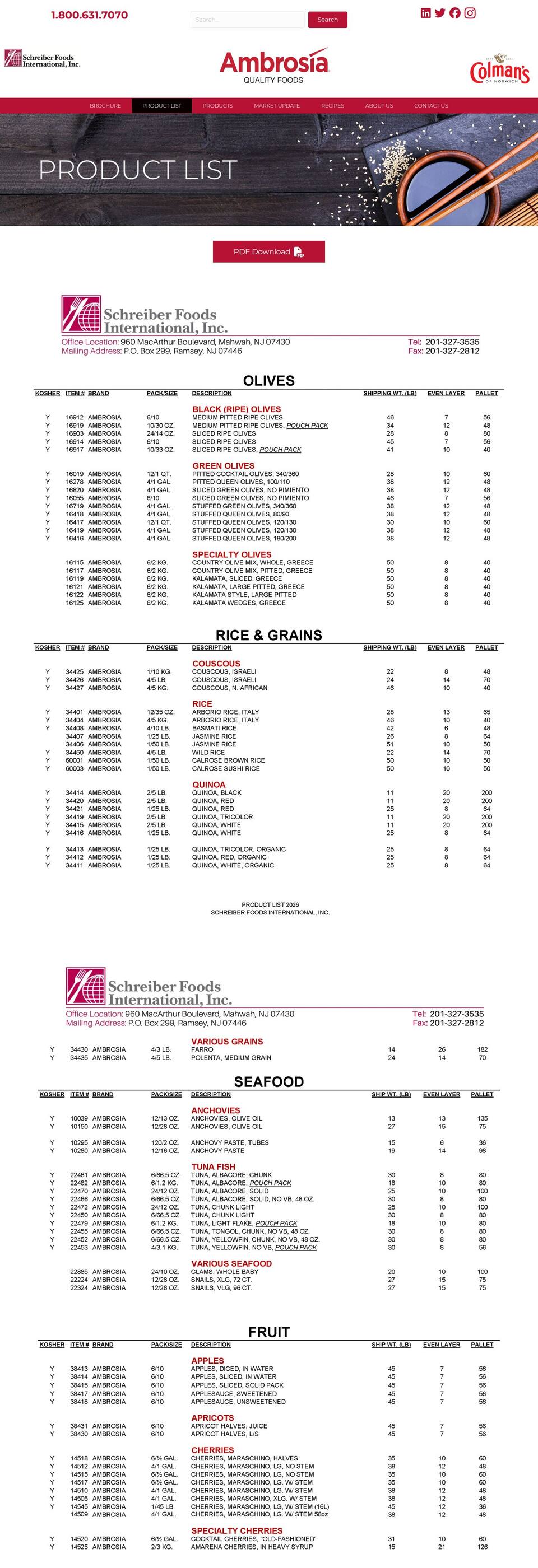
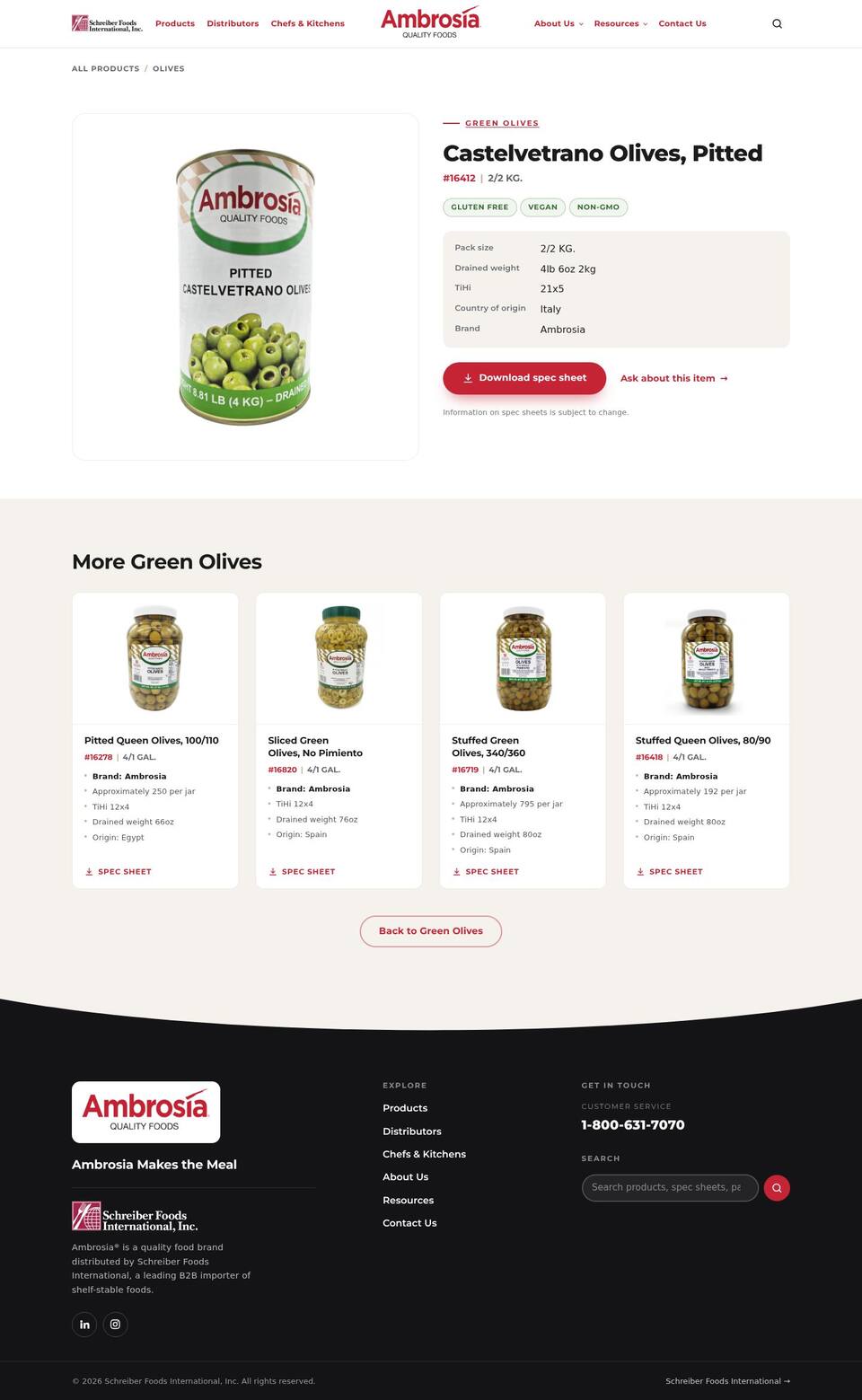
The old "Product List" was one table more than 12,000 pixels long, laid out like a printed price sheet. The rebuild imports it as data: each SKU gets a page with its pack, origin, dietary tags read from the manufacturer's spec-sheet PDFs, a one-click spec-sheet download, and related products. The printable list is still available as a PDF.
Beforeambrosia-foods.com/product-list/12,000+ px
Old product list: a dense table of item numbers, pack sizes and pallet counts
First 4,200 px shown. The table runs for several more screens.
After/ambrosia/products/castelvetrano-olives-pitted-16412/
New product page for Castelvetrano Olives, Pitted, item 16412, with Gluten Free, Vegan and Non-GMO tags and a spec-sheet download button
Item 16412: tagged Gluten Free, Vegan and Non-GMO from its spec sheet, with the other green olives below.
Maps

Maps built from data, not screenshots

The old sourcing page had a small map image with the country shapes baked into the pixels. Both new maps are inline SVG, so they stay sharp at any size, their labels are real text that search engines can read, and the client can update them from WordPress.
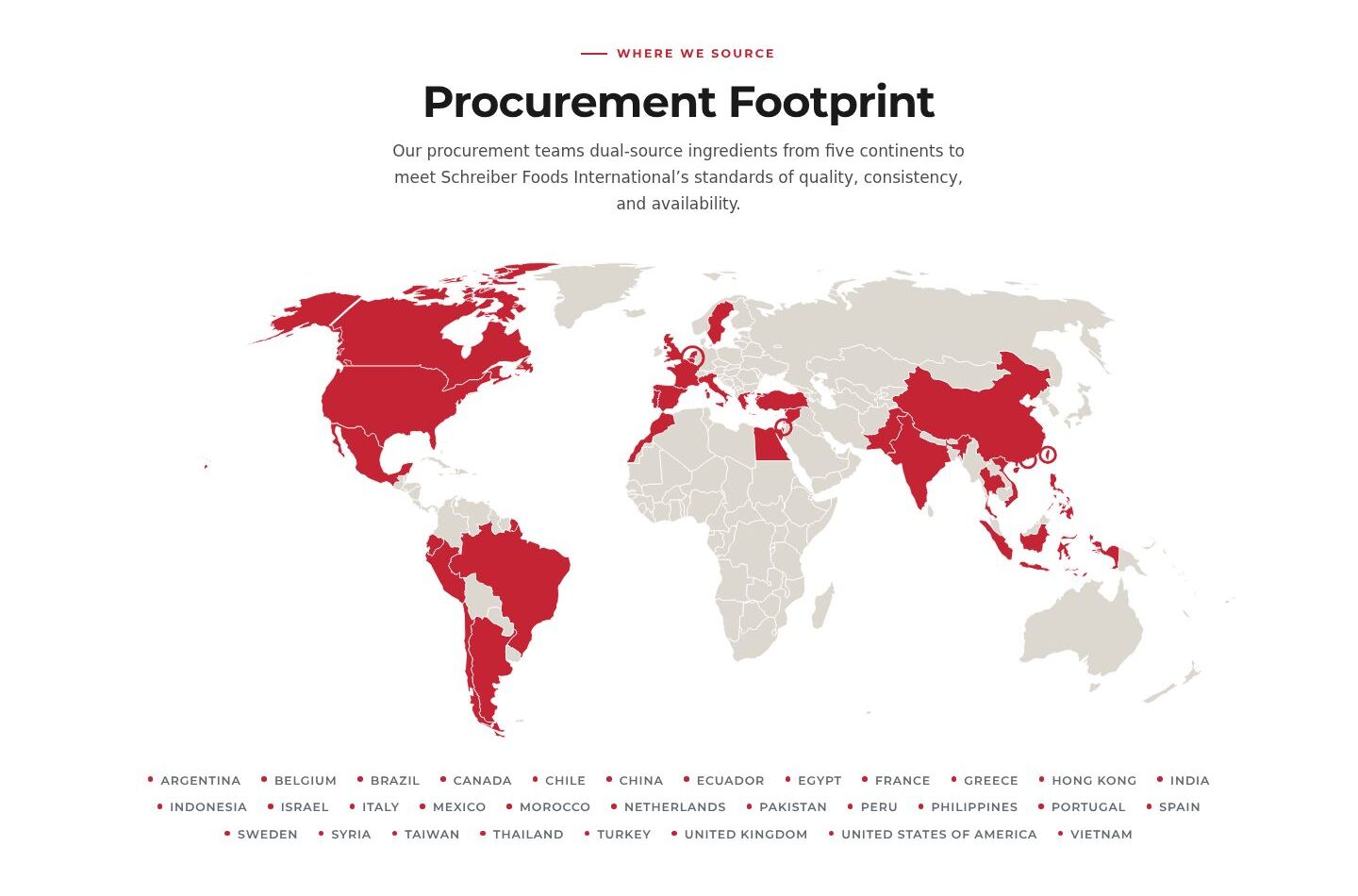
Procurement Footprint: a world map with 31 sourcing countries in red and their names listed below
After

Procurement Footprint. 176 countries from Natural Earth data in the Robinson projection. The 31 sourcing countries are picked from a list in WordPress, and the list is generated from the same data as the map, so the two always match. Small countries such as Belgium and the Netherlands get a locator ring.
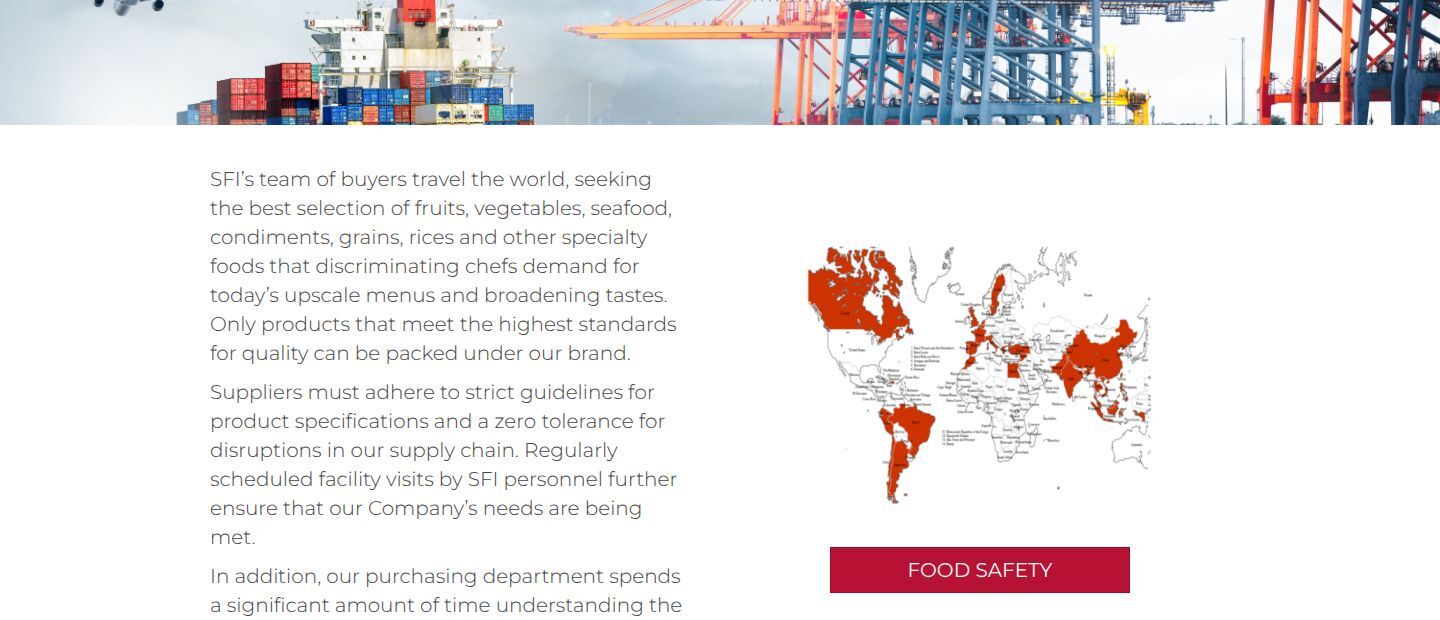
Old sourcing page: body copy beside a small raster world map with a Food Safety button
Before

Sourcing, previously. A small image of a map, placed beside the body copy.
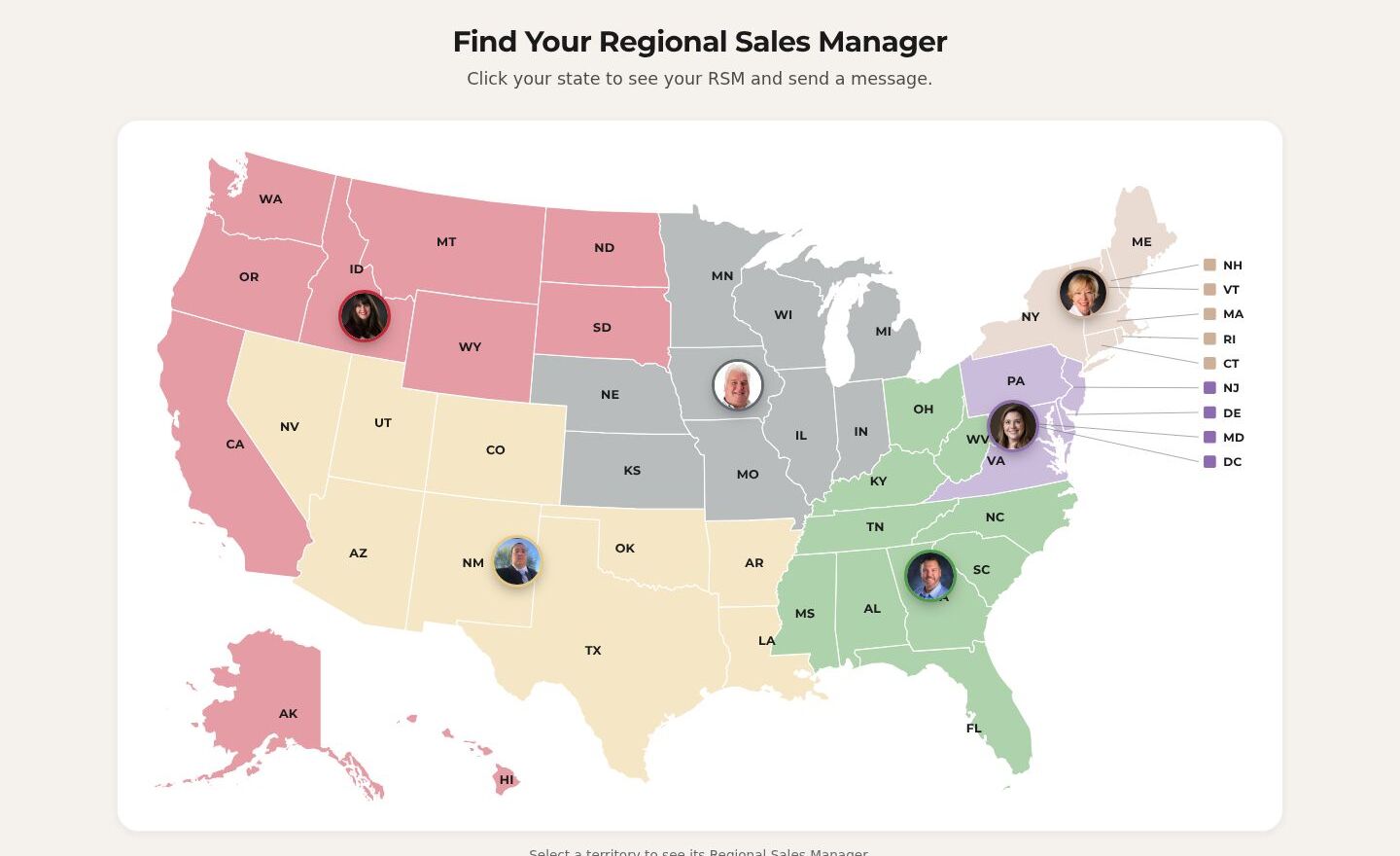
Find Your Regional Sales Manager: a US map with states coloured by territory and a photo of each manager
After

Find your Regional Sales Manager. Distributors click their state to see who covers it, then send a message that's routed to that manager. Small northeastern states have labelled leader lines.

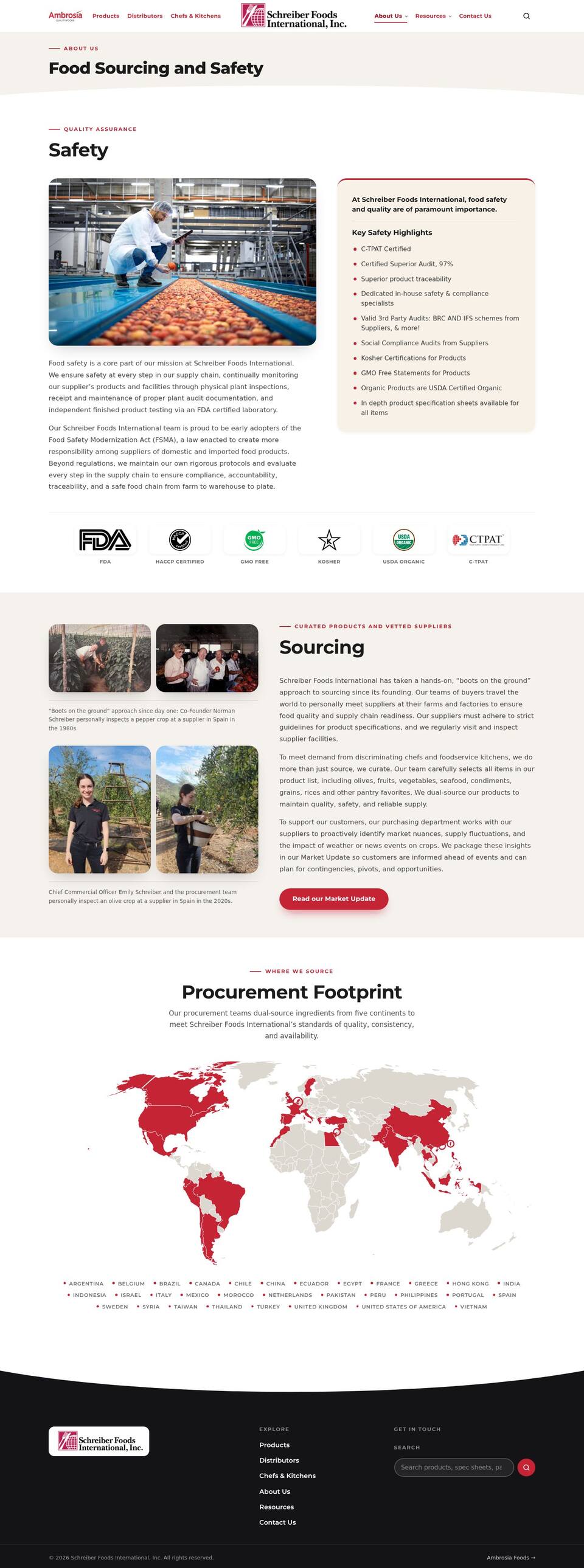
Beforeambrosia-foods.com/sources-2/
Full old sourcing page
After/food-sourcing-and-safety/
Full new Food Sourcing and Safety page: safety highlights, certification marks, sourcing photos and the procurement map
Distributors

From a list of addresses to a page for distributors

Distributors used to get a list of warehouse addresses. Now they have a page that explains why they should carry Ambrosia, shows how Schreiber supports them, links to their sales manager, and answers common questions in FAQ markup that search engines and AI assistants can read.
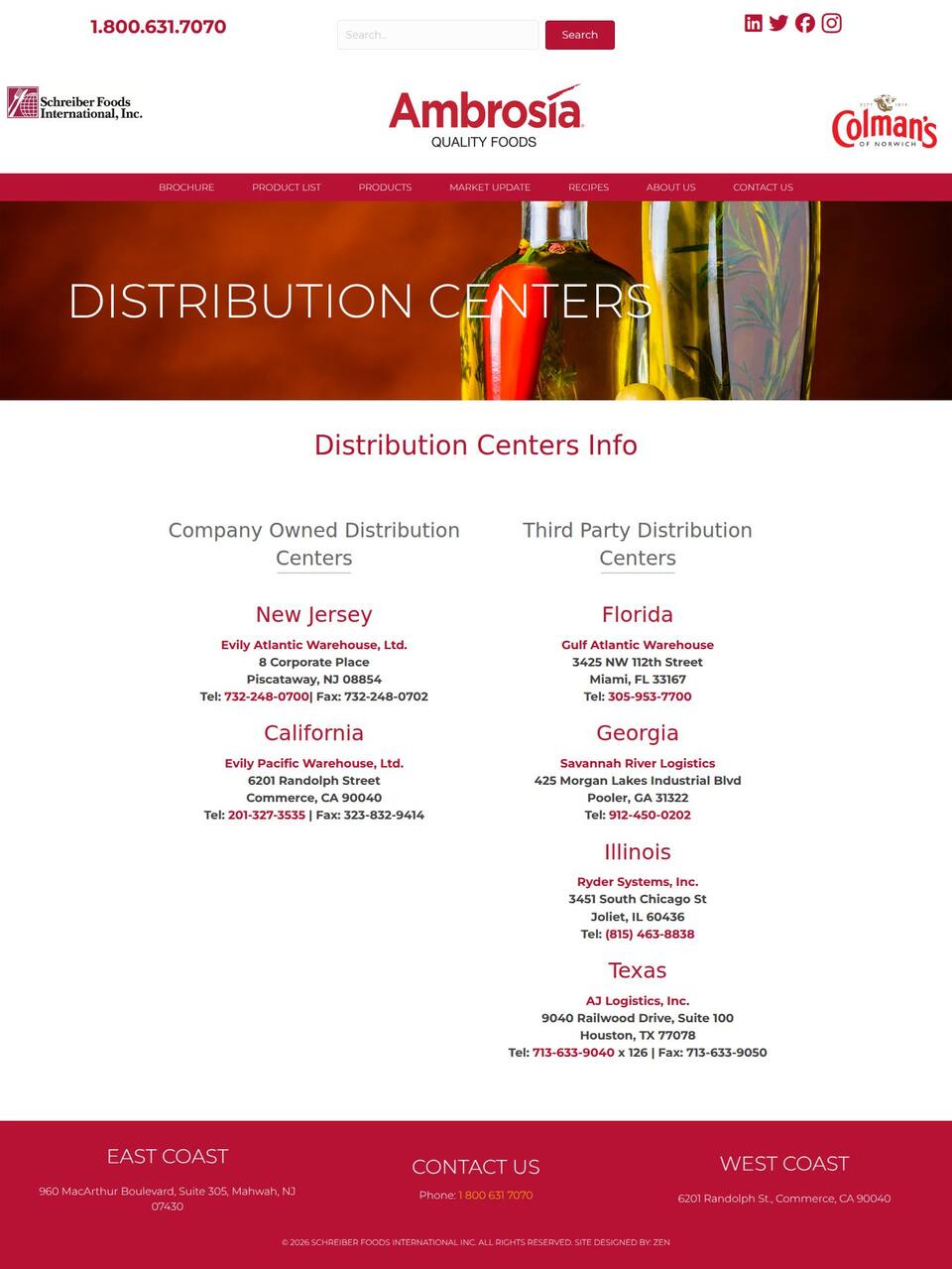
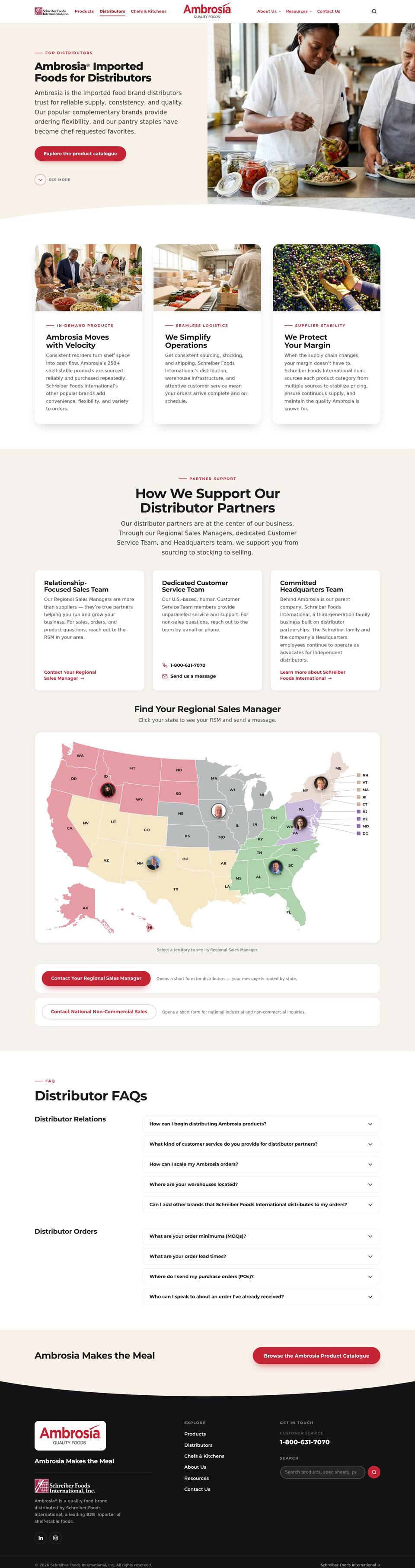
Beforeambrosia-foods.com/warehousing/
Old distribution centers page: centred list of warehouse addresses
After/ambrosia/distributors/
New distributors page: hero, benefit cards, support teams, the sales manager map and FAQs
Company story

A home for the parent company

Schreiber Foods International had one block of centred text on Ambrosia's About page. It now has its own domain with a company page, the brands it distributes, its operating pillars and a Legacy timeline, all sharing one navigation with Ambrosia so visitors don't notice when they move between the two sites.
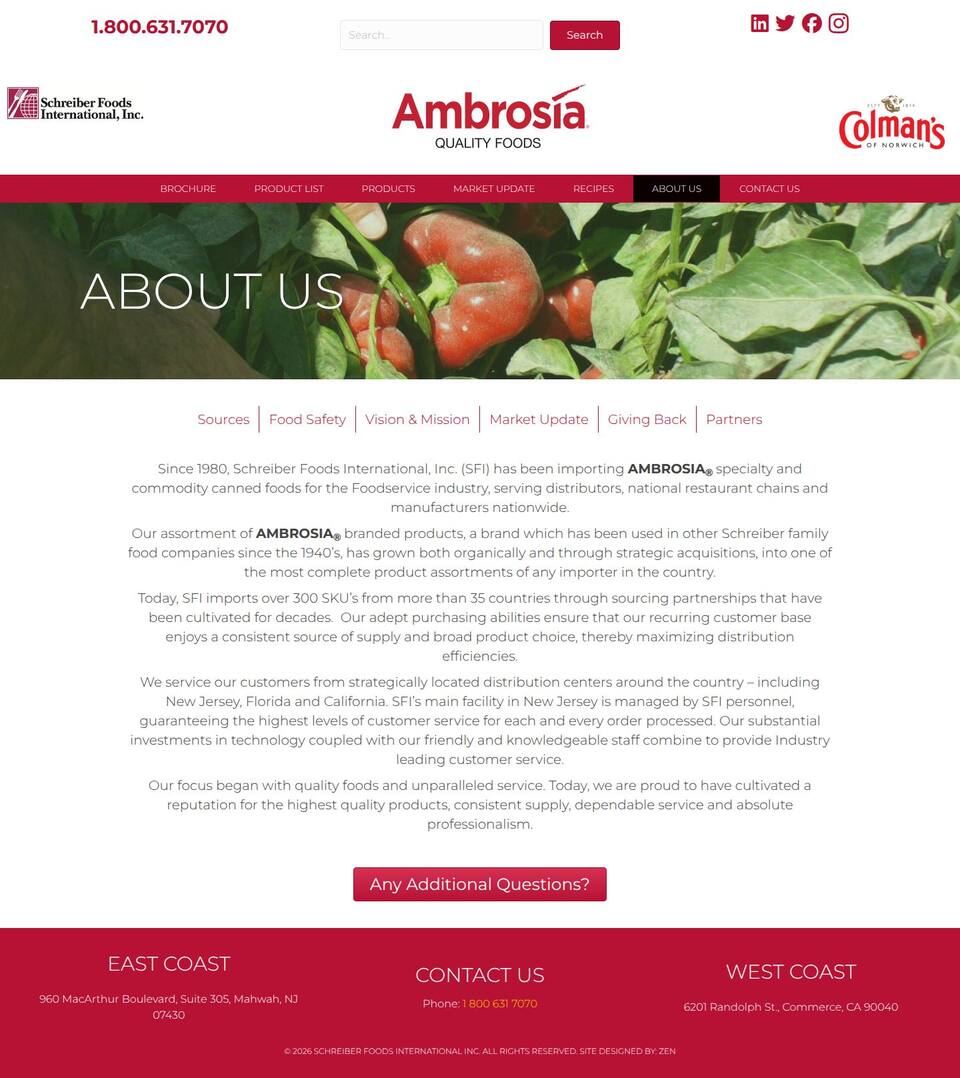

Beforeambrosia-foods.com/about-us/
Old About Us page: banner and one block of centred text
Afterschreiberfoodsinternational · /
New Schreiber Foods International company page: company intro, distributed brands, legacy, responsibility, community, five pillars and FAQs
New/legacy/12,000+ px
The Schreiber Legacy: a timeline running from the 1940s to 2026
The Schreiber Legacy. A new page with no equivalent on the old site: a timeline from the 1940s to today. First 12,000 px shown.